
SEO vs Google Ads - Which Marketing Strategy Is Best for Your Business?
Introduction
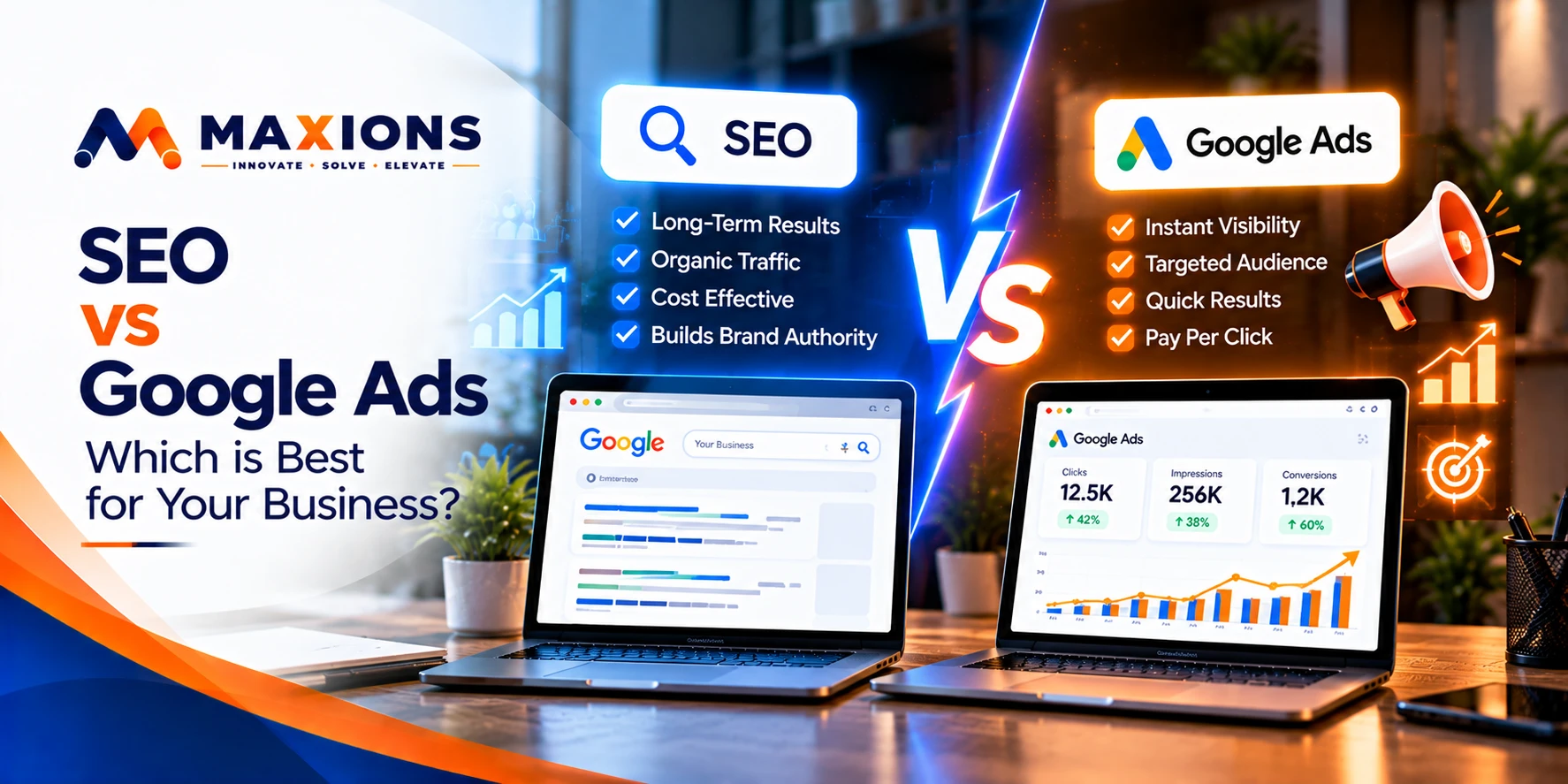
When it comes to digital marketing success, one question every business owner asks is, SEO vs Google Ads—which strategy delivers better results?
Both SEO and Google Ads are powerful ways to drive traffic, generate leads, and grow your business online. However, they differ in cost, speed, sustainability, and long-term impact. Choosing the right strategy depends on your business goals, competition, and marketing budget.
Key Takeaways
SEO vs Google Ads is not about choosing one—it’s about using both strategically.
SEO delivers long-term organic traffic and brand authority.
Google Ads provides instant traffic and quick lead generation.
SEO is cost-effective over time, while Google Ads requires ongoing investment.
Combining both strategies gives maximum ROI and consistent growth.
SEO vs. Google Ads: Understanding the Core Differences
What is SEO (Search Engine Optimization)?
SEO is the process of optimizing your website to rank higher in organic search results. It includes keyword optimization, high-quality content, technical SEO, and backlinks.
What is Google Ads PPC advertising?
Google Ads is a paid advertising platform where businesses bid on keywords to appear at the top of search results. You pay only when users click your ad.
Get More Calls & Leads for Your Business Today
Difference Between SEO and Google Ads Quick Comparison
SEO vs. Google Ads Comparison Table
When to Choose SEO for Your Business
Long-Term Growth and Stability
SEO is the best choice if your goal is to build a strong online presence and generate consistent traffic over time.
Cost-Effective Marketing Strategy
Although SEO takes time, it reduces dependency on paid ads and provides sustainable results.
Build Trust and Brand Authority
Websites ranking organically are often perceived as more trustworthy by users.
When to Choose Google Ads for Your Business
Instant Leads and Quick Results
Google Ads is perfect when you need immediate visibility, traffic, or sales.
Highly Targeted Advertising
You can target users based on location, keywords, device, and behavior.
Ideal for Testing
Google Ads helps test keywords, landing pages, and offers before scaling SEO efforts.
Which is Better: SEO or Google Ads?
SEO vs. Google Ads: The Real Answer
If you’re wondering which is better SEO or Google Ads, the answer depends on your business goals:
Choose SEO for long-term traffic and brand growth
Choose Google Ads for instant leads and quick conversions
Use both for maximum visibility and ROI.
Outrank Your Competitors and Grow Faster
Google Ads vs. Organic SEO: Why You Should Use Both
The Smart Marketing Strategy
Instead of debating Google Ads vs. organic SEO, successful businesses combine both:
Run Google Ads for immediate traffic
Invest in SEO for long-term rankings
Retarget visitors using paid campaigns
Dominate both paid and organic search results
Conclusion
In the debate of SEO vs. Google Ads, both strategies play a crucial role in digital marketing success. SEO helps you build a strong foundation with long-term organic traffic, while Google Ads delivers immediate results and targeted leads.If you truly want to scale your business, the best approach is to combine both strategies effectively.
Ready to Grow with the Right Strategy?
FAQs
1. What is the difference between SEO and Google Ads?
The main difference between SEO and Google Ads is that SEO focuses on organic traffic, while Google Ads is a paid method for instant visibility.
2. Which is better, SEO or Google Ads, for small businesses?
SEO is better for long-term growth, while Google Ads is ideal for quick leads. A combination works best.
3. How long does SEO take to rank?
SEO typically takes 3 to 6 months to show results.
4. Is Google Ads expensive?
It depends on your industry and keywords, but it provides fast results.
5. Can I do SEO and Google Ads together?
Yes, combining both improves visibility and conversions.
6. Which gives a better ROI, SEO or Google Ads?
SEO gives better long-term ROI, while Google Ads provides quick, short-term returns.